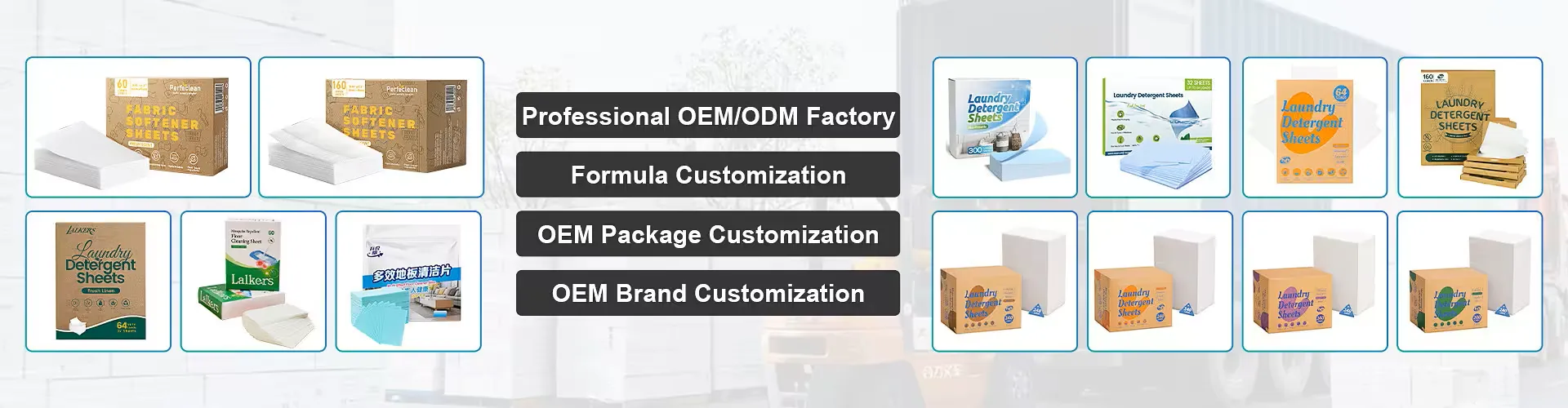
Floor cleaning sheets are lightweight, water-dissolvable cleaning products designed to be dropped into a bucket of water before mopping. Unlike bulky liquid floor cleaners, they compress all active cleaning components into a thin solid sheet. Their material system combines a water-soluble film carrier, core cleaning agents, functional additives and auxiliary stabilizers, and different brands adjust the formula to suit tile, hardwood, laminate or marble floors.
The base carrier material that forms the sheet shape is mostly polyvinyl alcohol, commonly known as PVA. This water-soluble polymer gives the sheet its fixed thin shape while allowing it to break down evenly once submerged in water. Glycerin is usually blended into this carrier layer as a plasticizer. It keeps the sheet flexible and prevents it from turning brittle, cracking or sticking together during storage. Some eco-focused versions replace part of the PVA with modified cellulose or plant-derived film substrates to boost biodegradability, though pure PVA still dominates most mainstream products for its stable dissolving performance.
Surfactants serve as the core cleaning materials. Anionic surfactants such as sodium lauryl sulfate and alpha olefin sulfonate are widely used for strong grease-lifting ability. Non-ionic surfactants and mild amphoteric surfactants are often mixed in to reduce streaks on smooth floor surfaces and lower irritation. Plant-based alternatives like alkyl polyglucoside and saponins are popular in green formulas; these are extracted from coconut, sugar or soapbark and work gently without leaving stubborn residues. Surfactants reduce water surface tension, wrap around oil and dirt particles and suspend them in the cleaning water so dirt can be wiped away easily by a mop.
Builder agents and chelating materials are essential for stable cleaning results, especially in areas with hard water. Sodium carbonate and sodium bicarbonate adjust pH and help loosen grime, while citric acid, sodium citrate and sodium gluconate bind mineral ions in hard water. Without these chelators, calcium and magnesium minerals will react with surfactants, weaken cleaning power and leave cloudy white marks on tiles and glossy floors. These ingredients also help dissolve limescale and water stains that build up along floor seams and bathroom surfaces.
Many products add targeted functional ingredients according to their positioning. Enzymes such as lipase break down cooking grease and organic dirt, which is helpful for kitchen floors. Quaternary ammonium compounds are added to antibacterial versions to suppress bacteria and odour, suitable for families with pets or young children. Some formulas contain a tiny amount of silicone-based anti-streak additives to leave a faint protective layer and speed up floor drying. Natural essential oils or synthetic fragrances are optional additions to create a fresh scent, while colourants are mixed in only for visual distinction and bring no cleaning benefit.
Auxiliary stabilizers and filling materials maintain the sheet structure and extend shelf life. Sodium chloride and sodium sulfate control moisture balance and prevent active ingredients from degrading prematurely. Preservatives are added in low doses to stop mould and bacteria from growing inside sealed packs, particularly for sheets with plant extracts. Reputable brands avoid phosphates and harsh optical brighteners that may damage sealed hardwood or pollute wastewater.
It is worth noting that material selection directly decides which floor types a sheet can safely clean. High-alkaline formulas with sodium carbonate are powerful on ceramic tiles but may dull polished marble or damage unsealed wood. Products with strong antibacterial agents are not always needed for ordinary daily mopping and may trigger skin discomfort for sensitive users. Eco-friendly sheets prioritise plant surfactants, fragrance-free recipes and biodegradable carriers, trading a small amount of heavy-stain performance for lower environmental impact.
In short, a qualified floor cleaning sheet relies on balanced cooperation between its water-soluble carrier, surfactants, water-conditioning builders and optional functional additives. Knowing these basic materials helps buyers avoid mismatched formulas that scratch floors, leave streaks or cause unnecessary irritation.
需要我接着写一篇配套的 How to choose floor cleaning sheets 英文短文吗?